panarama
The best paper for gouache painting depends on what you want your brush to leave behind. For a first pad, we recommend Canson XL Watercolor in 9 × 12 inches for daily practice. Its 30 cold-pressed sheets give beginners room to mix colors and practice washes.
As an Amazon Associate I earn from qualifying purchases.
For lettering on a shop sign, choose the smooth ARCHES Aquarelle Hot Press pad. For a broad, wet sky or textured washes, the four-edge Legion Stonehenge Aqua White block holds the sheet in place as it dries.
If you paint outdoors or work from dark to light, see the two specialist picks below. Compare paper texture, weight, and price per study, then try the four-mark gouache test before buying a pad. Paper choice matters because it changes how gouache handles water, how crisp your edges stay, and how many corrections the surface can take.
We matched each Amazon listing to its product specifications. All five papers weigh 300 gsm.
Five gouache paper picks, from hot press pads to cold pressed blocks

Everyday gouache practice
Canson XL Watercolor Pad
9 × 12 in · 140 lb / 300 gsm · 30 sheets
The cold-pressed watercolor paper gives dry-brush gouache visible texture. The 30-sheet pad is a practical choice if you repeat a subject in several color mixes.


Fine lines on hot press paper
ARCHES Aquarelle Hot Press Pad
9 × 12 in · 140 lb / 300 gsm · 12 sheets
This smooth, natural-white cotton watercolor paper makes it easy to keep edges crisp. Choose the short-edge pad for gouache lettering or botanical details.

Cold pressed paper for textured washes
Legion Stonehenge Aqua Coldpress White Block
9 × 12 in · 140 lb / 300 gsm · 15 sheets
Four glued edges support damp cotton watercolor paper while the wash dries. The cold press texture shows through broken gouache brushwork in grass and foliage.
A watercolor journal for travel
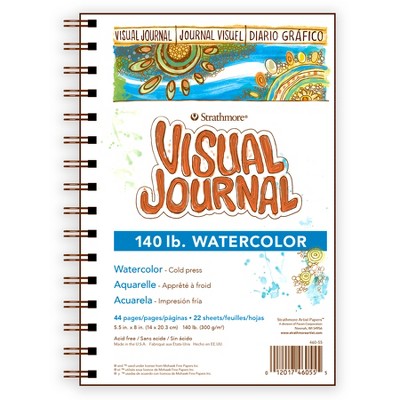
Strathmore Watercolor Visual Journal
5.5 × 8 in · 140 lb · 22 sheets
The cold-pressed pages open flat for gouache sketches on location. Its 5½ × 8-inch format leaves less room than a full pad for a broad wash.
Opaque gouache on black paper
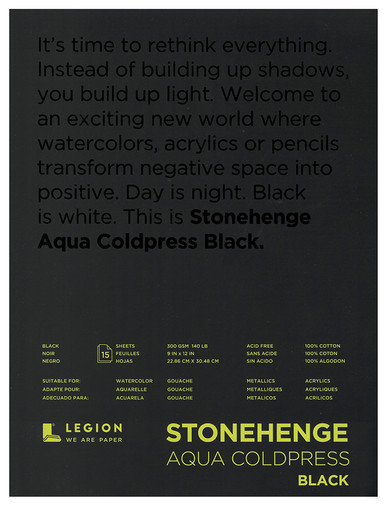
Legion Stonehenge Aqua Coldpress Black Pad
9 × 12 in · 140 lb / 300 gsm · 15 sheets
On this black, cold-pressed watercolor paper, leave the darks bare and paint the lights. For highlights on toned paper, choose colors with good covering power.
Canson XL Watercolor for everyday practice
For a gouache color study, cut one 9 × 12-inch page into four 4½ × 6-inch rectangles. Paint the same subject on each, changing the amount of water in your brush. On cold pressed watercolor paper, a drier stroke skips across the texture. A wetter one fills the grain.
This fold-over pad gives you 30 sheets of 140 lb (300 gsm) watercolor paper, enough to repeat the exercise with other colors. For lettering, try smooth hot press gouache paper. Canson XL surface specifications
ARCHES Aquarelle Hot Press for fine lines
Artists who paint fine railings, lettering or botanical stems may prefer this hot press paper. For this job, a smooth surface lets a pointed brush pull an unbroken stroke. Leave narrow gaps between the rails to use the natural white of the paper as a highlight.
ARCHES makes these watercolor papers from 100% cotton and sizes them with gelatin. The 9 × 12-inch pad holds 12 sheets of 140 lb (300 gsm) paper, glued on the short edge. For a wet background, tape the gouache paper to a board. ARCHES Aquarelle pad specifications
Legion Stonehenge Aqua Coldpress White for layered washes
Start with a wet sky, let it dry, then lay opaque layers of gouache along the tree line. The texture of this white cotton watercolor paper lets a dry brush leave broken marks between the leaves. Four glued edges hold the painting in place as the wash dries. Gouache artists who prefer to paint two scenes at once should have a second surface ready, since the first needs to dry before release. The 9 × 12-inch block holds 15 sheets. Legion Paper’s cold-press specifications
Strathmore Watercolor Visual Journal for portable sketches
The wire binding folds back, so this 5½ × 8-inch journal leaves room for a palette on a café table. Its 22 sheets of 140 lb (300 gsm) cold-pressed paper give you 44 pages for gouache thumbnails and mixing notes. Use facing pages to compare the same view in morning and evening light. Leave two facing pages for a pencil sketch and its three-color painted version.
Keep a panorama’s main subject clear of the wire. Leave the pages open until the paint dries before packing your art supplies. Strathmore’s 460-55 journal specifications
Legion Stonehenge Aqua Coldpress Black for opaque highlights
On this black cotton paper, a pale moth needs only its wings and markings painted. The paper supplies the darkest value. A thick dab of opaque gouache stays more visible than a dilute wash of the same color. Check the quality of the edge as well as how vibrant the gouache looks against black. If you usually work on white or mid-value toned paper, test opaque gouache in the margin first. Paint a stripe of diluted yellow beside one of opaque paint and let both dry. A blue that looked fantastic on white may disappear on black. Judge its dry color. On toned paper, a touch of white in a gouache mix makes an easy side-by-side comparison.
This 9 × 12-inch, top-glued pad holds 15 sheets of 140 lb (300 gsm) cold-pressed paper for textured brushwork. Legion Paper’s black paper specifications
Which watercolor papers work best with your style of gouache painting?
Hot press vs. cold pressed watercolor paper for flat shapes and dry brush
Hot press paper is a great choice for gouache illustration with clean, flat shapes. If you draw a botanical label, start at the thinnest stem and compare the paper grain with your brush tip. A pointed brush can trace its length on smooth hot press watercolor paper. Fill the shape with a flat brush and the even surface texture lets the color read as one area. That quality also suits artists who prefer to lay one clean band of opaque paint around a letter.
On rough watercolor papers, the same fine stroke can skip across hollows. Canson’s guide to watercolor paper grain.
Cold pressed watercolor paper has a visible tooth. That textured surface can interrupt flat gouache color, but the same texture helps when you want a broken mark. Skim a nearly dry brush over a painted wall and the undercolor peeks through like flecks of mortar. Canson XL Watercolor has enough texture for this kind of gouache brushwork and a surface rated for repeated washes. For an illustration built around dry brush, that texture can save you from painting every little gap. Canson XL surface specifications.
How do paper fibers and sizing affect watercolor papers?
Artists often use 100% cotton watercolor paper as a professional benchmark for repeated wet work. Good watercolor papers also come from wood pulp. St Cuthberts Mill makes its archival Bockingford paper with purified wood cellulose and recommends it for lifting color.
Both can produce paper suitable for framing. St Cuthberts Mill on fiber and performance.
Sizing changes how absorbent the surface is. ARCHES uses gelatin throughout its Aquarelle range to control absorption. If a sky wash dries at the edge before you can bring the next stroke alongside it, a less absorbent surface can buy you time to blend. Let the paint soften under a damp brush when making corrections. A hard scrub can raise fibers. How ARCHES sizes its watercolor paper.
For large areas of diluted gouache, 300 gsm is a useful starting weight. The four glued edges on a watercolor block keep the paper taut as the gouache dries, helping prevent warping. Water can still pool in the middle of a large painting. Keep the paper on its backing board until the last wet patch has dried. For a single finished panel, a rigid illustration board made specifically for wet media saves you from carrying a separate drawing board. Legion’s guide to watercolor blocks.
Which mixed media paper works for a finished painting?
Lightweight mixed media paper works well for gouache practice, especially pencils with dry-to-damp color. For wet gouache washes it is less reliable than heavyweight watercolor paper. As the paper takes up water, unsupported pages can buckle. Use lightweight mixed media paper for practice. For finished gouache work with broad wet washes, choose heavyweight watercolor paper or a mixed media paper designed for repeated wet layers. A lightweight mixed media sketchbook suits those quick studies.
Acid-free paper helps prevent the support from yellowing over time. That keeps pale passages and bare paper looking closer to the original. For lasting gouache colors, also check the paint maker’s lightfastness rating for each pigment. Winsor & Newton lists Permanent Rose as permanent and Opera Pink as fugitive. Strathmore on light washes. Winsor & Newton’s color chart.
For a mixed media piece you plan to hang, check which media the paper maker actually lists. A heavy, sized art paper made specifically for mixed media can hold gouache beautifully. Strathmore’s 500 Series Heavyweight Mixed Media is a 570 gsm example. Strathmore’s heavyweight paper specifications.
Does cold press texture change how gouache layers behave?
Cold press texture can leave the base color visible in the hollows. A smooth hot press finish gives a more continuous second stroke. The paint binder determines whether that stroke can lift the color underneath. Traditional gouache is an opaque watercolor. The dry medium softens when rewetted, so the second stroke may lift the first. On a very absorbent paper, try a soft brush with less water for layering a pale gouache highlight. For a pale cloud over a dark sky, pass the brush lightly across the dry paint. Acrylic gouache dries to a water-resistant film. Traditional and acrylic gouache can look similar on a palette but do not behave the same way on watercolor paper once dry. On toned paper, the pigment’s opacity determines how much of the ground shows through. Liquitex on gouache binders.
A four-mark paper test for watercolor paper and sketchbook pages
Cut a scrap from each of the watercolor papers you want to compare. Note the brand and finish on the back in pencil. Mix one puddle of dark gouache on your palette and use the same brushes and paint on each scrap. Use the medium as you would in your own art. If your style calls for thick gouache, try that consistency as well as a more watery mix.
1. Test a wet gouache wash. Draw a small pencil square. Fill it with one pass of diluted paint, leaving half the patch for the last test. Watch how easily you can carry the wet edge to the far corner. When dry, lay the paper on a table and check whether the corners sit flat.
2. Test a fine line and dry-brush texture. Draw a railing on bare paper with the tip of a round brush. Next to it, drag the nearly dry edge of a flat brush to paint a stone wall. Look for an unbroken railing and small flecks in the wall. Prefer the railing on one scrap and the texture on another? Save both as references for your art.
3. Test opacity over a dark color. When the square dries, mix white gouache with a little color. Paint one stripe across the dark patch and continue onto bare paper. Compare the ends. A dark tint picked up from below tells you how gently you need to lay your next layer of lighter gouache.
4. Test how a correction lifts. Rinse and blot a soft brush. Pull it once through the untouched paint. Compare your watercolor papers for a clean lift, a soft edge, or raised fibers. Judge paper quality by the correction you use most. Stop if the surface starts to pill. Repeatedly trying to scrub out a staining color can damage good paper. Traditional and acrylic gouache behave differently here. Liquitex on the two binders.
Before attaching gouache paper to a board, try your tape on a dry margin. Peel back slowly and check for raised fibers.
What does good gouache paper cost per painting?
Use your usual picture size as the unit. For a 4 × 6-inch study on one face, a 9 × 12-inch sheet cuts into four pieces, with a narrow strip left for testing color. A 5.5 × 8-inch sheet holds one study of that size.
Suppose a 30-sheet pad costs $18 and a 22-sheet journal costs $11. Those example prices work out to 15 cents per study for the pad ($18 ÷ 120) and 50 cents for the journal ($11 ÷ 22). The journal also keeps the work together for you. Recalculate with the price in your cart and allow for borders if you tape the edges.
At checkout, read the selected size and surface next to the price, then enlarge the front-cover photo and check the sheet count. For example, the 140 lb Strathmore Visual Journal pictured here holds 22 sheets, or 44 pages when both faces are counted. Do not assume that 44 pages will give you 44 separate gouache paintings to frame. Count those 22 leaves once. Strathmore journal cover and specifications at Target.
If a listing combines several pads, check the printed model code before buying. A cover photo can show a different binding or size from the option in your cart. How to check the model and what comes in the package.
Choosing the best paper for a gouache sketchbook
Can I use cardstock or regular sketch paper?
For a quick thumbnail in gouache, try a damp brush on a scrap first. Cardstock varies in both weight and sizing. If the thin paper ripples or starts to pill on the second stroke, keep it for pencils or color notes. For a full-page gouache wash, choose cold pressed watercolor paper or wet-media illustration board. Offcuts from framed art save money on studies.
Can a cold pressed watercolor sketchbook handle gouache at 200 gsm?
For small gouache studies, cold pressed watercolor paper in a journal can handle more water than the weight alone suggests. Moleskine’s Watercolour Album uses 200 gsm cold-pressed cotton-blend paper designed for wet work on both sides. Already own one? Try gouache on the last page before buying a heavier book.
For full-page washes, 300 gsm watercolor paper gives you more resistance to buckling. Moleskine album specifications · Canson’s guide to paper weight.
Should I soak hot press paper before painting?
Check the instructions for the paper you hope to stretch. Saunders Waterford 140 lb (300 gsm) is suitable for gouache. St Cuthberts Mill notes that soaking its hot press paper makes the surface slightly rougher. If you prefer the smooth surface for fine art lettering, preserve it by following the mill’s handling instructions. Leave artwork on a four-edge watercolor block until dry. Saunders Waterford specification sheet · The mill’s handling instructions · Canson on watercolor blocks.
Can I paint on both pages of a mixed media sketchbook?
Often, yes. If you’re interested in using both sides, try your gouache medium on facing watercolor pages first. Test with the brushes you usually carry. Flats show how a broad shape covers, while pointed rounds reveal any texture that interrupts a stroke. On a slick paper an over-diluted gouache mix may bead. On a more absorbent paper the wet edge can vanish before two strokes meet. Leave painted pages open until dry. When removing pages to give away your art, reserve the reverse pages for color recipes. Photograph your notes before the art leaves. In a bound journal, number the pages and keep a pigment index on the last two pages.