Plan battery backup for household essentials. Compare watts, usable run time, solar panel bundles and the connections your appliances need.
Home Backup Power
0
.bs-solar-picks{box-sizing:border-box;max-width:none;display:grid;gap:14px;margin:1.2rem auto ...
 panarama
Size a battery around the outage you want to cover
Make a short list of the devices you want to keep running and the number of hours each one matters. A refrigerator, a router and two lamps make a different shopping list from an electric range or a well pump. Record each appliance’s voltage, plug and supply requirements. Consider which appliances actually need to run at the same time.
Estimate energy for a night without power
Watts tell you how much power an appliance draws at a given moment. Watt-hours add up that draw over time. A group of devices averaging 120 watts for ten hours uses 1,200 watt-hours before inverter losses. A battery advertised at 1,200 watt-hours will therefore fall short of that example through its AC outlets. Leave room for conversion losses, changes in appliance use and the reserve you want left over.
A refrigerator cycles, so a single reading while the compressor is running can give a misleading estimate of overnight energy use. A plug-in energy meter used over an ordinary day can give you a better baseline for a compatible appliance. Check starting demand separately. A station with enough battery capacity may still lack the output, voltage or outlet needed when a motor starts while other loads are running.
Compare the complete solar kit
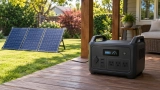
Record the station model, the number of panels and the watt rating of each panel. Two 200-watt panels provide 400 watts of nameplate panel capacity. The battery itself may be sold on another listing with no panels at all. Rigid panels and portable folding panels also need different storage and setup space. Look at cable lengths and included connectors before deciding where the station and panels could go.
Start a second-day plan with the energy you used overnight. A 400-watt array receiving three hours at its full rated power would provide 1,200 watt-hours before losses. Shade, panel angle and the station’s charging limits can reduce the amount that reaches the battery. Check the station’s solar input voltage and current range as well as the maximum watts. An extra panel is only useful in an arrangement the manufacturer permits.
Decide how the power will reach each appliance
For plug-in backup, choose a location where the station can operate within its temperature, ventilation and moisture limits. Check access to the outlets after you move the station into position. For connected home circuits, have a qualified electrician assess the required inlet, approved transfer equipment and the loads the system can supply. Never connect a station to a household wall outlet to energize the wiring.
The solar generator comparison for home backup identifies the included panels, available outlets and output for each featured kit. Use those details alongside your measured load list to decide what will last overnight and what will need to wait.

We help you compare the features you’ll use, the extras you’ll need, and what a product will cost to own.