
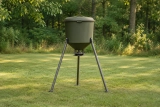
 panarama
Deciding whether a wildlife feeder belongs on your property
Before buying a deer feeder, check the rules for the property where you intend to use it. The answer can depend on the state, county and land manager who oversees it, including park or preserve staff. Even a feeder used only for wildlife viewing can be subject to feeding restrictions. New York publishes a deer and moose feeding prohibition, while Wisconsin maintains a county-by-county map and advises readers to check local ordinances. Check the current rule before committing to a return shipping charge on a bulky hopper.
How do you want to maintain the feeder?
Where feeding is permitted, choose a design you can service reliably. A gravity feeder dispenses through its outlets and has no timer to program. A powered dispenser adds a motor, a controller and a power supply. The second arrangement gives you scheduling controls, along with more parts to keep dry, check and eventually replace. If you are comparing two models with the same hopper capacity, look at the maintenance instructions for both before choosing between them.
Check which battery the complete model takes, whether it is included and whether the battery compartment can be opened without disturbing the hopper. On a timed feeder, look up how to read the controller and how it handles a battery change. A walk to the equipment can take longer than the service itself. A replaceable timer or removable dispenser can make routine attention easier when the owner lives elsewhere.
Is the stated capacity practical?
Read the capacity in the manufacturer’s units and note the material the figure refers to. A hopper’s pounds rating applies to a stated or assumed feed. The number of bags that you can carry, store dry and use within their storage guidance may be smaller than the hopper will hold. If the system is awkward to refill, a larger advertised capacity may simply mean a larger container to move or clean.
Use the listed fill height, lid opening and footprint to judge whether a person can carry out routine service comfortably at that site. Check the shipping dimensions too. Oversize boxes may cost considerably more to return, and legs or mounting accessories shown in a photograph may arrive in a separate package. Confirm what the retailer includes and compare complete delivered prices for the same configuration.
Can you keep the equipment clean and obtain parts?
Look for clear access to the inside of the hopper, outlets and any removable feed tray. Review the maker’s cleaning and storage directions, including how parts dry before the next use. Check the troubleshooting notes for the exact dispenser. Two kits from the same brand can use different electronics and parts. If an essential component has no published part number, ask the seller how a replacement is obtained.
Before ordering, make yourself a short ownership list with the base unit, separately sold hardware, batteries, a spare lid or seal if available, expected service trips and available replacement components. Keep the wildlife agency’s current guidance with that list. Where feeding is prohibited, wildlife viewing can still be the aim of the visit. The National Park Service describes ways to observe animals at a distance while allowing them to find their own food. National Park Service wildlife viewing guidance.