
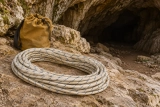
 panarama
Choosing a rope for your caving kit
Before you compare rope prices, write down the model of each ascender and descender that will be used with the rope. A cave club may already have a kit list for its vertical courses. Getting that list first can save you from buying a full coil that your instructor or equipment manager cannot accept. The rope’s intended use, diameter, length and traceable history all matter on the day it comes out of the bag.
Does this exact rope work with the devices you own?
Look up the technical notice for the exact generation of each device. Match the rope’s construction and classification as well as its nominal diameter. A product family can include several models with different specifications, and a device can list different requirements for different uses. For example, Petzl publishes separate compatibility tables for its CROLL S and CROLL L chest ascenders. The table for the device in your hand is the one to consult. Petzl CROLL technical notice.
Save the rope maker’s product sheet alongside those device notices. A listing that calls a rope “static” may omit the manufacturer’s classification or its intended applications. Ask for the complete product reference if the specification you need is missing. For a first vertical course, the National Speleological Society’s Vertical Training Commission is a starting point for finding hands-on instruction.
What are you actually carrying?
Rope weight is often quoted in grams per meter. Multiply that figure by the length of the coil you are pricing. As an illustration, a difference of 10 grams per meter adds up to half a kilogram over 50 meters, before the bag and other equipment. If several people will share the load on a trip, the assembled bag weight is also a useful figure for the club inventory. Make that comparison only after you have two compatible candidates and your group has specified the length. The packaged shipping weight can include the spool and leads to a misleading comparison.
Check the units at checkout. A retailer may display several cuts under one picture or switch from feet to meters between a title and a size selector. Record the final selected length and the delivered price. If you are buying for several people, ask how the seller labels each cut and provides the original product identification and instructions.
How will you identify and care for it?
Two ropes from the same shelf can end up with very different histories. For club equipment, choose an identification and record system that the person issuing the rope can use consistently. Keep the manufacturer’s label, purchase information and inspection instructions together. Distinct colors can help people find a bag in a gear room, but several production runs may share a color. Use the maker’s identifiers in the record.
Allow space in your budget and at home for the storage and inspection routine the manufacturer specifies. Look up care guidance before buying cleaners or treating a sheath. When comparing a discounted coil with a new retail package, ask what you can establish about its age, storage and prior use. If that history is unclear, leave the suitability decision with your equipment manager. The purchase price tells you little about the service life available to your group.