panarama
The Fujifilm X-T5 is our pick for the best camera for landscape photography on foot. Its 40.2-megapixel sensor gives you room to crop, and its 557-gram body leaves room for a lens you’ll want to carry uphill. For big prints of moving water or trees, the Sony a7R V captures more detail in one exposure. Beginners get a lens with the Canon EOS R100 kit. For a photographer who already owns Nikon F-mount glass, the D850 makes a different case. A body that meets your print target can leave more of your weight allowance and budget for the lens that actually frames the view. Use the table to compare hiking weight, lens coverage and maximum uncropped print size.
As an Amazon Associate I earn from qualifying purchases.
Four cameras for landscape photography at a glance
| U.S. offer | Sensor | Weight to carry | Uncropped print at 300 ppi |
|---|---|---|---|
| Fujifilm X-T5 silver body | APS-C · 40.2 MP | 557 g body / add lens | 25.8 × 17.2 in |
| Sony a7R V body | full frame · 61 MP | 723 g body / add lens | 31.7 × 21.1 in |
| Nikon D850 with 24–120mm f/4G ED VR | full frame (FX) · 45.7 MP | 1,005 g body / 1,715 g with lens | 27.5 × 18.3 in |
| Canon EOS R100 with RF-S 18–45mm | APS-C · 24.1 MP | 356 g body / 486 g with lens | 20 × 13.3 in |
Body weight includes a battery and card. Add the lens even when it comes in the box. The lens determines how wide a view you can fit into the frame from a given spot. That’s easy to overlook online and hard to fix on a ledge with no room to step back.
Fujifilm X-T5 mirrorless camera for landscape photographers who hike
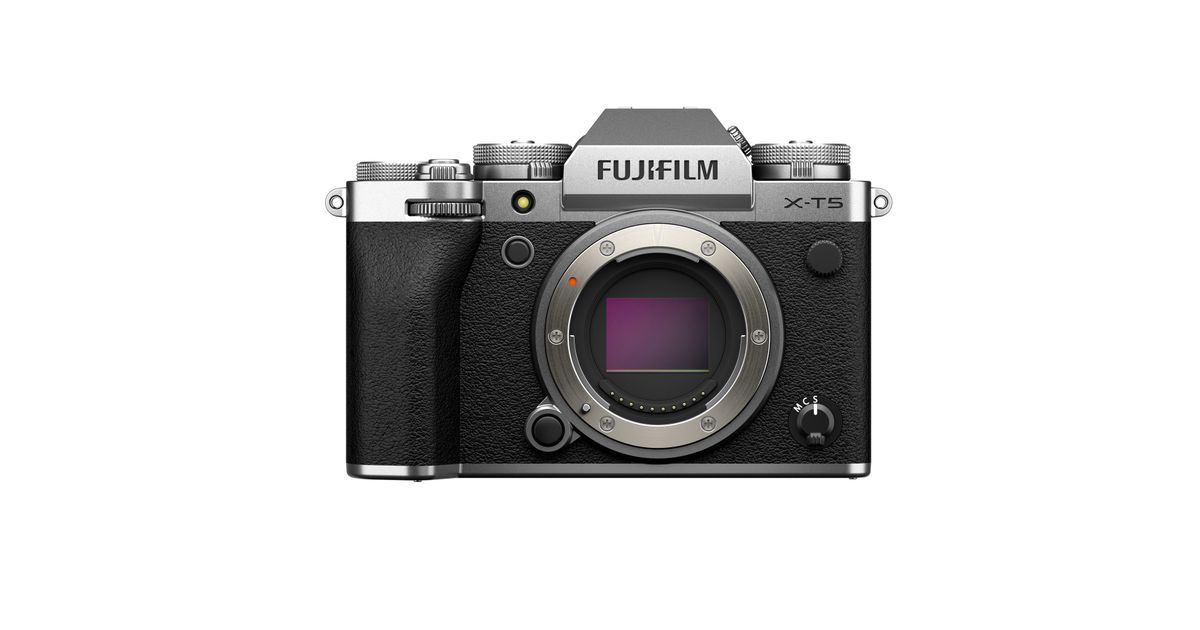
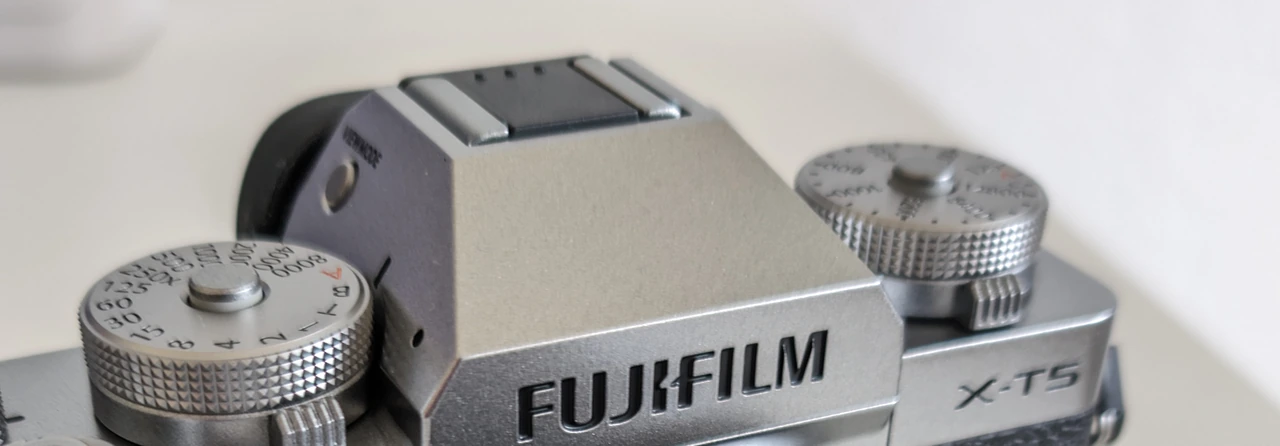
On a steep trail, the silver X-T5 gives you 40.2 MP in a relatively compact APS-C mirrorless camera. The three-way tilting screen makes it easy to compose a vertical photograph of flowers from knee height. Physical shutter-speed and exposure-compensation dials are legible before you raise the viewfinder. The silver offer below is a body, so price a Fujifilm X-mount lens alongside it. Fujifilm’s X-T5 specifications.
Which lenses suit a long walk?
A lighter kit makes a long hike easier, especially if you also carry water and a tripod. A 16mm lens on this camera gives roughly the same view as a 24mm lens on full frame. A tighter view has its place too. In a Fujifilm field story, landscape photographer Kara Jackson shows pictures made with both a wide lens and a 70–300mm zoom on her X-T5. Look at how the distant layers fill the frame in the telephoto images. If that’s the view you love on a hike, a second lens may do more for your photography than a larger sensor. Kara Jackson’s photographs and lens choices.
Watch the manufacturer video

Sony Alpha a7R V for large landscape prints from one frame
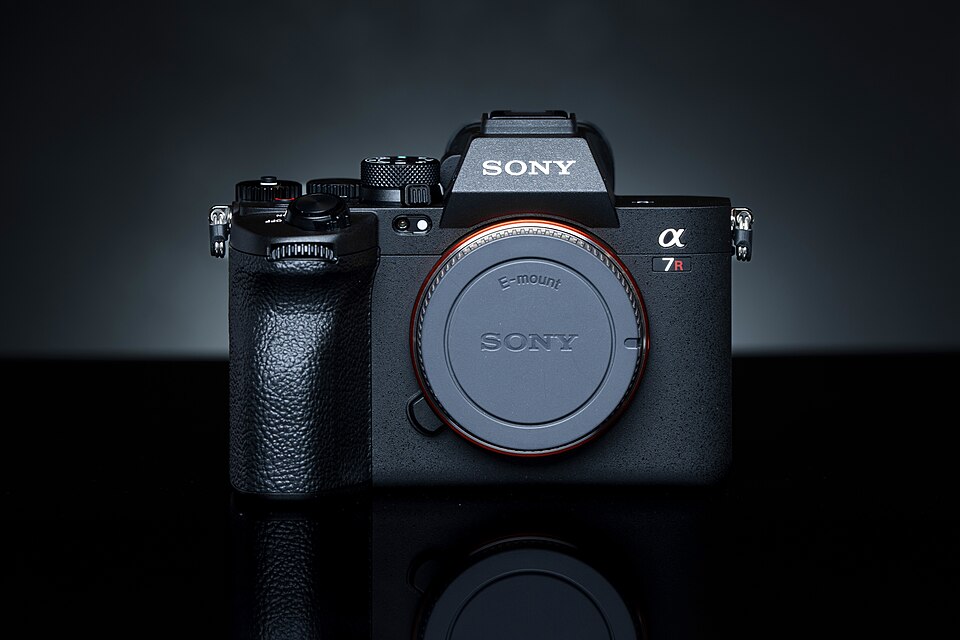
The Sony Alpha a7R V records 9,504 × 6,336 pixels in a full-resolution 3:2 image. At 300 pixels per inch, that’s a print almost 32 inches wide before cropping. That single-exposure resolution matters for ocean spray or falling snow, where details change between frames. Check the corners of the lens you plan to use. A 61 MP file shows a soft corner every bit as clearly as it shows the bark on a tree. This black full-frame E-mount body comes without a lens. Sony’s a7R V specifications.
When is a single exposure enough?
For still rock or architecture, Sony’s Pixel Shift Multi Shooting can combine 16 exposures in desktop software. Take a regular RAW picture as well. Compare ripples and foliage at full size before you print the composite. E-mount also gives you a choice of wide-angle lenses from Sony and third-party makers. Check that the lens covers full frame. An APS-C lens uses a smaller area of this sensor in crop mode. Sony’s Pixel Shift instructions.
Watch the manufacturer video
Nikon D850 for F-mount lenses and long days outdoors
Nikon D850 with 24–120mm f/4G ED VR
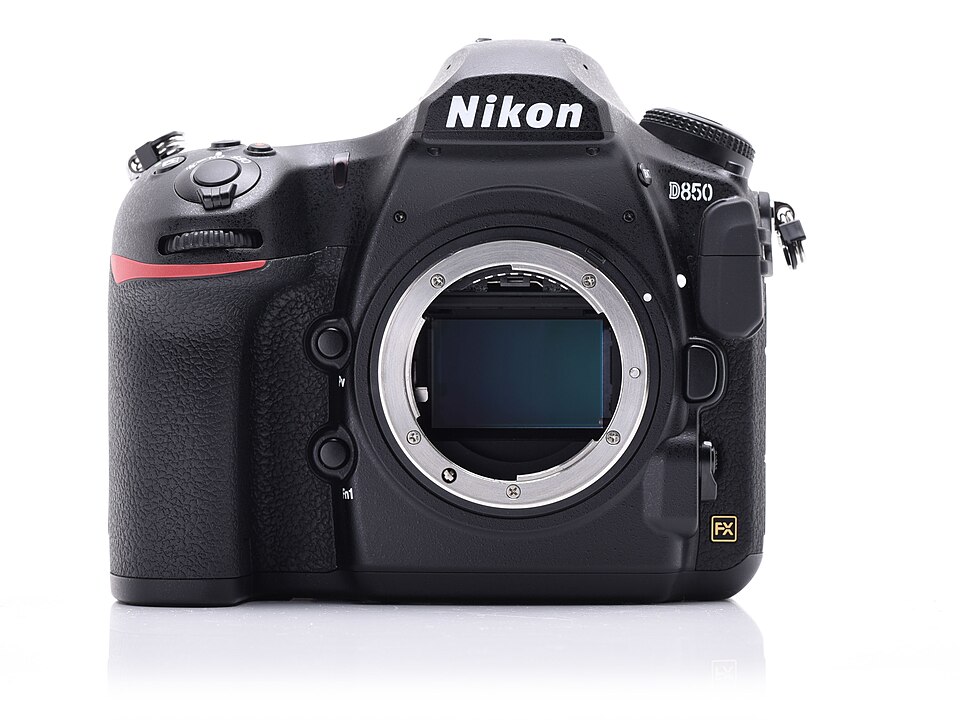
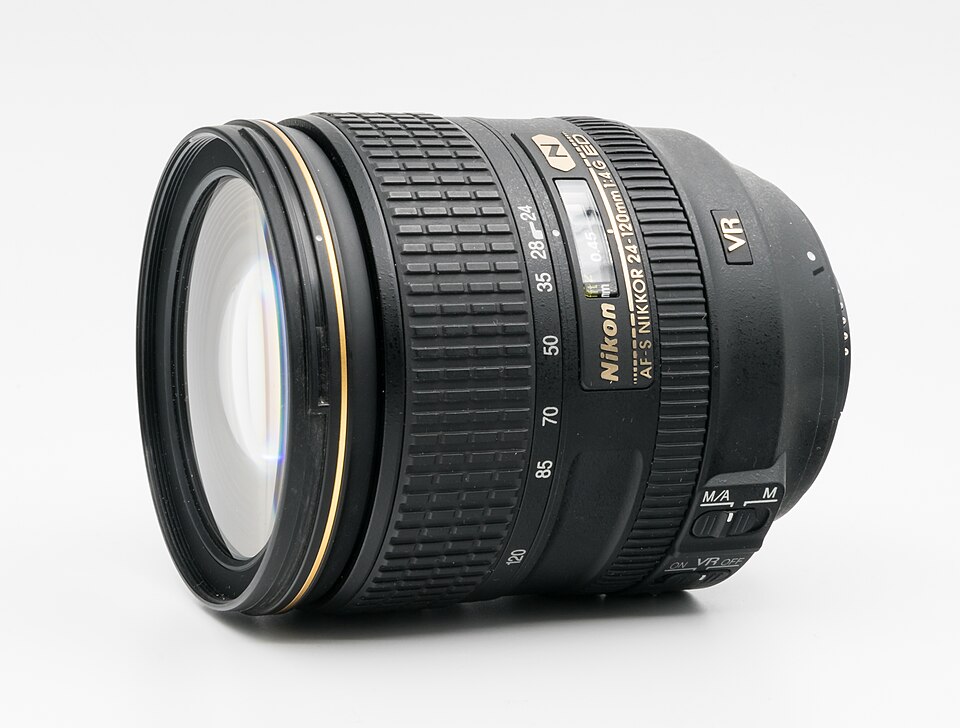
The D850 is a 45.7 MP full-frame DSLR with a native base ISO of 64. The kit here pairs it with the AF-S NIKKOR 24–120mm f/4G ED VR. Use the wide end to put a rock pool in the foreground and the 120mm end to pick out a sunlit ridge. The body and lens together weigh about 3.8 pounds before you add a tripod. A photographer who already owns that zoom should compare a body-only offer before paying for another copy. Nikon D850 specifications · Nikon lens specifications.
How much battery life does a DSLR gain?
A DSLR directs light to an optical viewfinder with a mirror that moves out of the way at exposure. The finder draws little power while you wait for the light, so DSLRs typically give you longer battery life than mirrorless cameras that keep an electronic finder lit. The D850’s long battery life is particularly helpful when there’s nowhere to charge on a hike. Its tilting screen is handy for ground-level work. For a near subject and a distant ridge, the D850 can record a focus-shift sequence with a compatible lens. John Shaw used this feature on a canyon photograph featured by Nikon. The camera takes the frames and you combine them in software. John Shaw’s D850 field example · Nikon’s focus-shift guide.
Watch the manufacturer video
Canon EOS R100 for a first landscape kit
Canon EOS R100 with RF-S 18–45mm
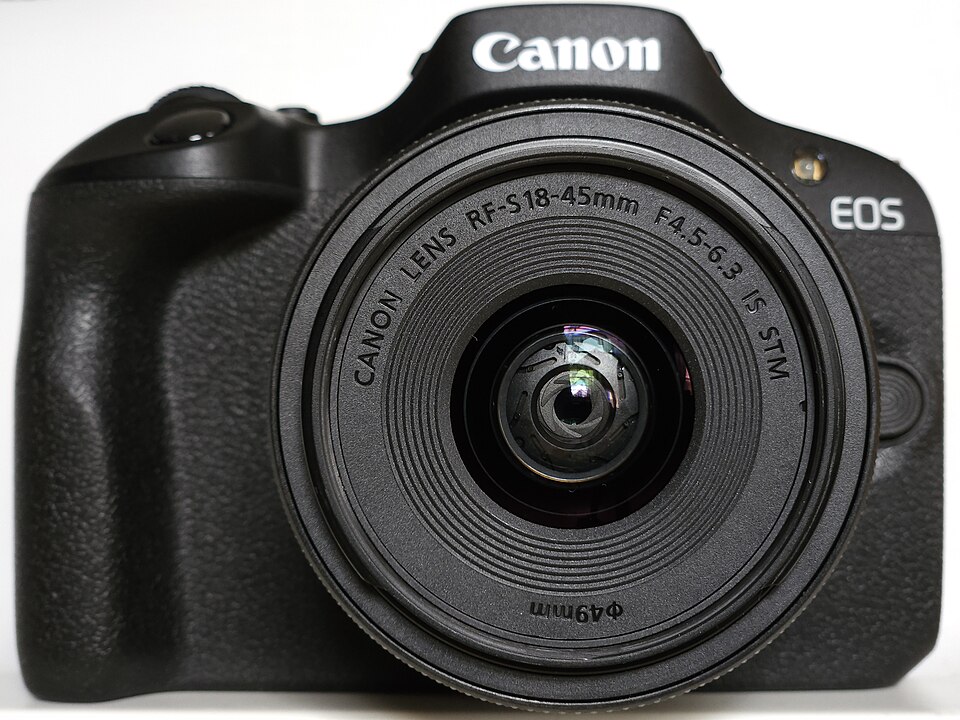
The EOS R100 pairs a 24.1 MP APS-C sensor with an RF-S 18–45mm stabilized zoom in this kit. The combination weighs about one pound. At 18mm it frames like a 29mm lens on full frame, wide enough for an open hillside but sometimes tight at the foot of a waterfall. If the budget only stretches to one purchase, this kit can make excellent landscape photos without a separate lens order. Canon’s specifications for this R100 kit.
Can the R100 frame a low-angle shot?
The rear screen is fixed, and the kit lens provides the optical stabilization for stills. When shooting from a few inches above the ground, expect to crouch to see the composition. For moving subjects in low light, such as grasses blowing across a dune, a faster lens or higher ISO may be worth more than stabilization. If ultra-wide views or stars are your main subject, price the appropriate lens before choosing the body.
Watch the manufacturer video
How large can you print your landscape photos?
Most modern interchangeable-lens cameras clear 20 MP. A good 6,000 × 4,000 photograph prints at 20 × 13.3 inches at 300 pixels per inch. Crop the width to 4,500 pixels and the same print density gives you 15 inches. At a more distant viewing position, 240 ppi may be enough. Divide the pixel width of your edited image by your intended print width in inches to see where you stand.
High resolution pays off when you crop a distant peak or invite a viewer to inspect a large print up close. For a photo book, clean focus, the lens and the light often matter more. Before spending on a new body, order a small test print of a section at the scale you want for the wall. Look at it from the distance of your sofa. That simple check can settle an expensive decision. If your test print already has excellent image quality, spend time trying a different composition before replacing the camera.
Would a different sensor or an older camera suit you?
A larger sensor can offer cleaner low-light files and more latitude in post-processing. A wide dynamic range lets you lift shaded rock while keeping texture in a bright sky, provided the highlights were recorded. Image quality also depends on the particular sensor, exposure and lens. Mirrorless designs usually offer a smaller body than a comparable DSLR. A heavy, fast zoom can reverse the weight advantage once the system is on your neck.
For experienced photographers deciding whether to upgrade, the older full-frame Sony Alpha a7R IV already delivers 61 MP, while the Sony Alpha a7 III offers 24.2 MP. If the a7R IV files already print at your desired size, the a7R V gives you little extra pixel width. The 30.4 MP full-frame Canon EOS 5D Mark IV is another reason to keep a good set of EF lenses in service. At the other end, the Fujifilm GFX100S pairs 102 MP with a larger medium-format sensor. Price the lenses and weigh the kit before moving to GFX for a larger print. Sony a7R IV · Sony a7 III · Canon 5D Mark IV · Fujifilm GFX100S.
Which exposure works when light, focus or weather changes?
For a bright sky over a shaded valley, inspect the histogram and highlight warning. If a single RAW file can’t hold both ends, keep the camera steady and bracket exposures for an HDR merge. For a still flower close to the lens and a distant ridge, use focus bracketing to extend depth of field and combine the focused areas afterward. If a gust moves the flower, try one carefully timed frame first. In that situation a fast shutter may preserve more detail than any composite. Motion between exposures can leave doubled edges in either merge.
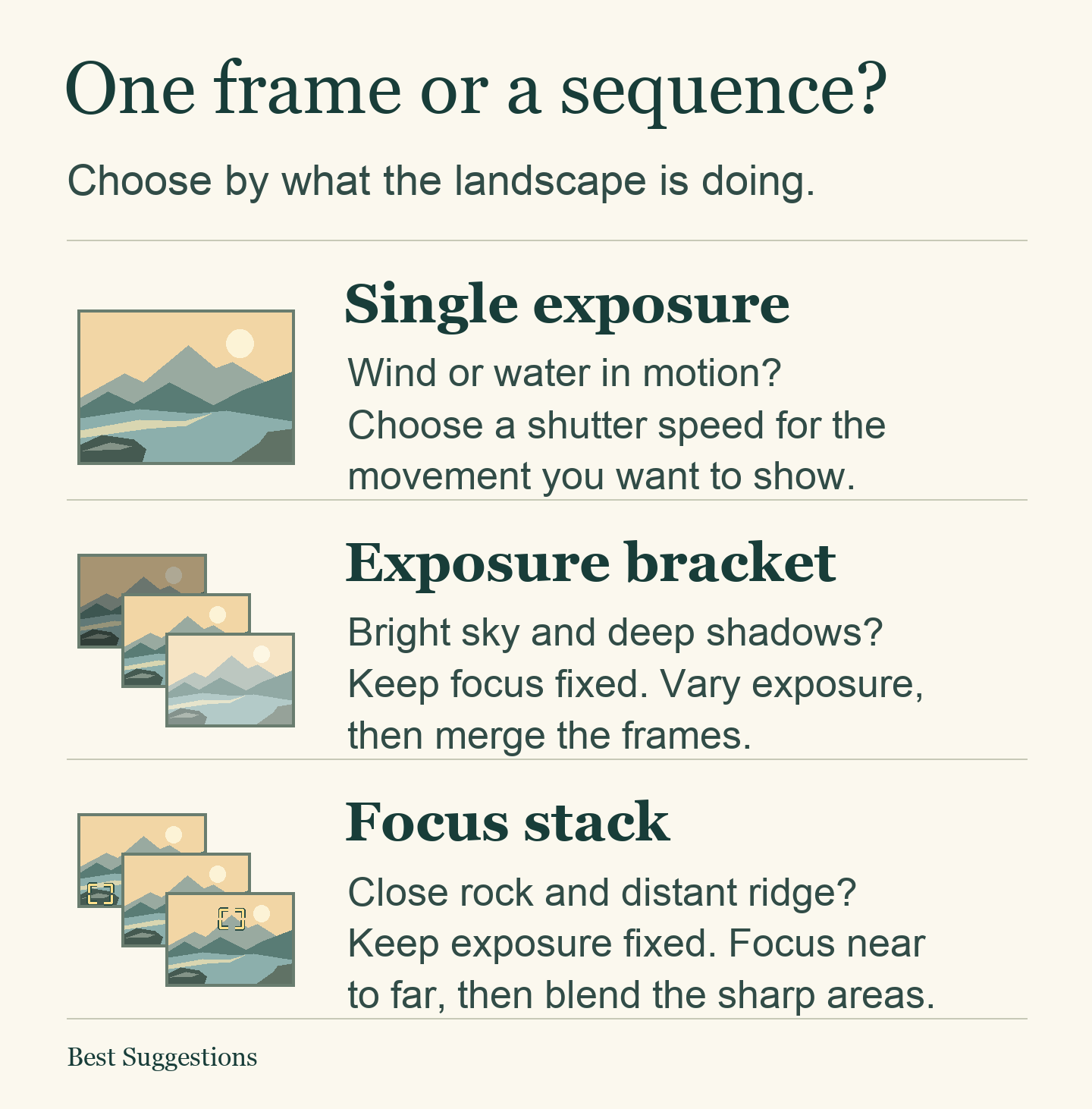
The X-T5 and a7R V offer in-body stabilization for handheld outdoor photography. It reduces camera movement, particularly useful when you’re composing the natural world from a narrow path with no space for a tripod. A short shutter time can freeze moving leaves. A tripod can hold a fixed composition through a slow exposure.
Our advice for moving water is to make two frames that leave room for creativity in the edit. Make a fast frame to hold individual drops, then a slow one to blend their paths. You can choose the look from the two files at home, without waiting on the bank for a single perfect shot.
For wet trails, check the body and lens together. A weather-sealed body with an unsealed lens still needs protection from dust and spray. A breaking wave can unleash a sheet of spray before you can zip a camera bag. Keep a cover and a dry cloth in an outside pocket, and choose a sheltered position before changing lenses.
How do landscape and wildlife photography change the choice?
Photographers who switch between a mountain view and birds in flight need different features for each job. Fast autofocus and a lens you can handhold matter for wildlife photography. On a tripod pointed at a valley, you may prefer a tilting screen that lets you place the horizon precisely. The right camera for someone who photographs both is one you can operate with your eye at the finder. Try changing the shutter speed and focus area without looking down. A user-friendly interface earns its keep when an animal crosses the frame. For winter nature photography, check whether the camera offers controls you can operate with gloves.
Is the right camera an upgrade or a different lens?
Start with the lens mount, package contents, seller and U.S. warranty. Add the cost of the lens, card and any adapter you need to the headline price. If your longest outing is a dawn walk with one lens, compare that smaller setup with the kit you already own. When you read owner comments on an older model, look for the lens and shooting conditions mentioned. Someone who switched from entry-level DSLRs may value compact size more than a photographer who works from a vehicle. Our first-year cost guide helps you compare complete kits on the same basis.
How we chose the four cameras
We compared manufacturer specifications, published field examples and the four identified U.S. listings. We have not field-tested these four packages. For hiking, we’d choose the X-T5 with a lens matched to the trail. For a large print of a moving scene, we’d choose the a7R V. The D850 kit gives an F-mount photographer the broadest zoom range here, and the R100 makes the least expensive route here to a body and lens in one box.