panarama
The best bottom drain for koi pond owners building a new lined pond is the EasyPro EBD4 if the plan calls for a 4-inch water line and aeration elsewhere. For an existing pond with a compatible 2-inch pump intake, choose the Aquadyne Rhino Retro RHRET-2. The difference matters: a through-liner drain needs access below the pond floor, while a retrofit sits on top. If you want a diffuser built into the bottom drain, there’s a separate pick for each installation. Here’s how to match the drain, filter and air supply before you buy.
As an Amazon Associate I earn from qualifying purchases.
Which koi pond bottom drain fits your setup?
We matched the exact Amazon models to their manufacturers’ specifications. Start with two questions: can you reach beneath the pond liner, and do you want the same unit to collect solids and deliver air? Match the bottom drain to the setup in three respects: pipe size, aeration type and construction material. For a buried installation, look for a durable body such as heavy-duty ABS or PVC and a flange designed for your pond shell. A concrete pond and a lined pond may need different seals.

New liner · standard dome
EasyPro EBD4
4-inch heavy-duty drain, plain dome
Plan for the matching outlet adapter. The plain dome suits a pond with air supplied elsewhere.


New liner · aerated dome
DreamPond KoiToilet I
4-inch aerated bottom drain
A built-in diffuser and separate air connection suit a new pond where both lines can be buried.
Existing pond · standard dome
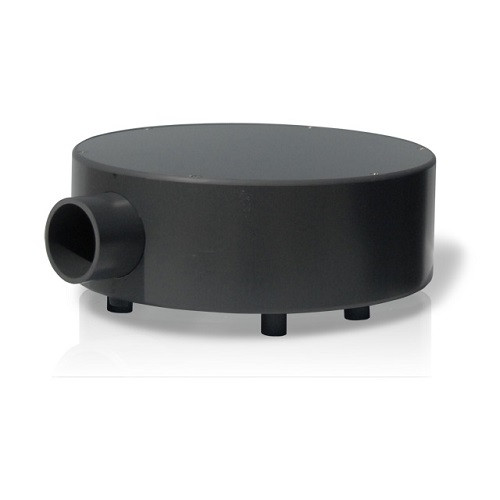
Aquadyne Rhino Retro RHRET-2
2-inch non-aerated retrofit drain
A ballast chamber steadies this above-liner intake. The 2-inch side port connects to a compatible pump suction line.
Existing pond · aerated dome
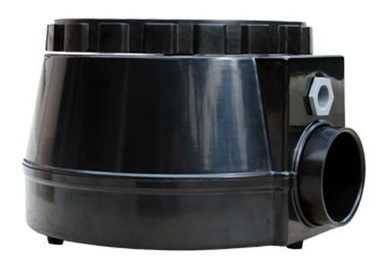
DreamPond KTV-WA
3-inch aerated retrofit drain
Water exits through the 3-inch outlet. A separate air pump feeds the diffuser through a 1/2-inch barbed connection.
Bottom drains for new koi ponds: standard or aerated?
EasyPro EBD4 for a plain dome and a 4-inch line
The EBD4 is a good bottom drain for a new build when an existing air pump and separate diffuser already cover the pond. Its heavy-duty, roto-molded body has a threaded connection and a liner ring held down by 16 stainless screws. The threaded standpipe holds the dome in place. There’s no air disc to maintain on this model.
One detail can save a return trip: the EBD4 needs the correct male adapter. EasyPro specifies the MA40 for 4-inch Schedule 40 PVC or its RMA4030 reducing adapter for a designed 3-inch line. Reducing a gravity line solely to fit a smaller filter port can restrict flow and encourage clogging. Check the model suffix when reading product reviews: EBD4A is the version designed to add air. EasyPro EBD4 fittings and dome specifications
DreamPond Koi Toilet I: an aerated bottom drain for a new build
The 4-inch Koi Toilet I is our premium pick if you can install water and air lines before the liner goes in. Its thick flange clamps the pond liner around the opening. The included 9-inch disc on the dome has an internal check valve. Rising bubbles create circulation: bottom water moves up and outward, helping other water sweep debris toward the drain opening.
The Koi Toilet takes a 4-inch water pipe and a separate 1-inch air line. These connections require different fittings. DreamPond recommends a pond air pump delivering 25–40 liters per minute per drain. Check the air compressor’s output at the pond’s depth. A long run of narrow tubing can create additional resistance. For this model, the manual specifies a half-inch to one-inch gap beneath the dome. The recommended dome height balances suction with the size of the opening a fish could enter. Too small a gap can restrict flow and catch debris. Too wide a gap can let smaller koi under the dome. Set the clearance before filling the pond. DreamPond Koi Toilet I parts and installation guide
Finished koi ponds: two retrofit bottom drains
Aquadyne Rhino Retro RHRET-2 for a 2-inch pump suction line
To retrofit a conventional through-floor bottom drain, you must first drain the pond so the cut and seal are accessible. Choose the non-aerated Rhino Retro when you want to keep the water in an established pond. The intake rests above the floor. Its heavy-duty PVC body rests directly on the pond floor. On smaller ponds, check that the route leaves open swimming space for the fish. A ballast chamber holds inert material to keep the unit in place, and the side port is designed for the suction plumbing. Measure that route from one end to the other, including bends and lifts, before buying equipment.
The Rhino Retro collects solids that reach the dome. It depends on suction, floor slope and existing circulation to bring them there. An over-the-side water line completes that installation without cutting the pond. Check whether your pump is designed for the lift over the pond edge and the length of the suction run. A through-wall route may still require lowering the water. For smaller ponds with separate aeration, this saves both excavation and the expense of another air supply. Aquadyne Rhino Retro setup and ballast
DreamPond KTV-WA for a 3-inch retrofit with air
The KTV-WA is a 3-inch aerated retrofit drain with a ballast chamber that rests on an existing liner. It includes an air diffuser on top and a 1/2-inch barb fitting for the air hose. The air pump is purchased separately. Plan a route for the 3-inch water outlet independently of the air hose. The exposed pipe is easy to reach for maintenance. It will also be visible from the surface.
Decide how you will retrieve the bottom drain for maintenance. Leave enough slack in the air hose to lift the unit without dragging fittings across the floor. Use the pressure-and-flow chart for the air compressor to check what it will deliver at the diffuser’s operating depth. A pump’s free-air rating is measured at the surface. DreamPond retrofit bottom drain connection diagram
Comparing similar model names on a budget
The plain EasyPro EBD4 and the aerated EBD4A look similar in product photos. If the Koi Toilet I is more expensive than your budget allows, price the EasyPro EBD4A with its adapter, air tubing and a suitable pump. The savings depend on which parts you already own. Include any fittings you will need to install either model. For a new pond over 1,000 gallons, the Aquadyne Rhino II is worth considering if build quality and access to a serviceable air system matter. This bottom drain uses welded Schedule 80 PVC and a reinforced flange. It goes under the pond floor. The similarly named Rhino Retro sits on top of it. Gallons alone won’t tell you which one fits. EasyPro EBD4A specifications · Aquadyne Rhino II construction
Gravity-fed or pump-fed: how bottom drains connect to the filtration system
While the circulation pump runs, a bottom drain continuously carries sinking waste to the filtration system. In a gravity-fed pond, water and debris reach the mechanical prefilter before the pump. The pump sits downstream and returns filtered water to the pond. It may return through a waterfall or underwater jets. In a pump-fed setup, the pump sends water to the filter. Check its intake protection and the solids it is designed to pass. An impeller can break larger debris into smaller particles before the filter catches it. Evolution Aqua gravity-fed and pump-fed diagrams
Why is four inches the industry standard for a gravity-fed bottom drain?
Four-inch Schedule 40 PVC is the usual starting point for a new gravity-fed koi pond bottom drain in the US. Actual flow depends on the whole plumbing run. For example, Aqua Exclusive sizes a 110 mm gravity line at about 3,300 US gallons per hour for its own drum filters. Your inlet, water-level difference, pipe length and bends change the available flow. For its Koi Clear filter, Matala allows up to 3,500 GPH into a single 4-inch gravity inlet. Its 4,500 GPH figure applies to a short, downhill return to the pond. Check which side of the filter a flow rating describes before choosing a pump. Matala’s inlet and return flow guidance · Aqua Exclusive flow and coverage examples
What does an anti-vortex design do?
A domed intake draws water under its rim from all sides. This bottom drain cover is designed to limit swirling over a single open pipe. This is why the shape matters even on a plain dome without an aerated drain’s diffuser. The gap below the rim is essential to flow: follow the clearance specified for your bottom drain and check it again when you install the cover. Check the dome again after a cleanout. A twig wedged under one side can create a gap large enough to trap a small fish. Conservation Technology’s bottom drain diagram
Where is the lowest point, and how many bottom drains do you need?
Position the bottom drain at the absolute lowest point on the pond floor. If the pond was designed with two separate basins, mark the lowest point of each. Slope the pond floor toward the bottom drain so the current carries fish waste downhill to the intake. Keep the path clear of loose stones that can trap solids. On a long pond, a return jet can help create a current along the far wall. A round 3,000-gal pond and an L-shaped 3,000-gal pond can need different layouts. A narrow basin may sweep well toward one bottom drain. A shelf separating two deep pockets can leave a buildup of waste in the pocket farthest from that drain. Two drains can help if each line receives enough flow.
Will smaller ponds need more than one bottom drain?
For a first sketch, pond retailer Play It Koi uses one bottom drain per 2,500–3,000 gallons and considers drains especially useful beyond 1,000 gallons. For an irregular pond over 3,000 gal, price a second drain and check flow to both branches before committing. These figures are planning guides. Pond shape and where the fish waste settles have the final say. Play It Koi’s pond sizing table
A surface skimmer intercepts pollen and floating litter. The bottom drain collects fish waste and other debris that sinks. To keep the pond cleaner through leaf season, empty the skimmer basket before its contents break apart and reach the floor. A waterfall at one end may leave a quiet corner at the other. If a lot of debris collects in one corner, try redirecting a return toward it. Better circulation there may do more for cleaner water than buying another bottom drain.
Is an aerated drain worth it for heavily stocked ponds?
Fish and the organisms in a biofilter use oxygen. An aerated drain pairs a water intake with a separate diffuser so you can deliver air at the pond floor. Play It Koi gives depths over four feet or a heavy fish load as reasons to consider aeration. In heavily stocked ponds, bubbles from an aerated bottom drain create circulation between deep water and the surface. That mixing can help maintain more consistent water quality at depth. In a pond with a light stock of koi, a plain dome may be enough if the existing aeration and circulation are adequate. Reassess water quality when you add fish or change how much you feed. Check dissolved oxygen and water quality when deciding how much aeration to add.
Does a bottom drain improve water quality? For cleaner water, follow the waste beyond the drain. A mechanical filter traps solids, and regular maintenance removes them before they break down. Prompt solids removal helps prevent ammonia spikes caused by debris breaking down. Fish also release ammonia directly into the water, so a working biofilter and water quality tests are essential even when the pond looks clear. University of Florida’s guide to solids, biofilters and water quality. To keep the pond cleaner with less daily effort, choose a bottom drain you can reach for service and a prefilter you can empty regularly.
Bottom drain sizing and maintenance: two pond examples
Finished liner, 2-inch suction line. For an existing liner, check where debris settles and whether you can lift the dome for cleaning. If a floor intake will feed the existing pump, the Rhino Retro is the straightforward choice. Keep the surface skimmer working where leaves blow in. If flow drops, check the intake guard and prefilter for clogging. Flow that improves after cleaning points to debris buildup in that part of the system.
New liner, 4-inch gravity line. Choose the Koi Toilet I if you want the diffuser at the low point. Mark the bottom drain outlet, air supply and filter’s operating level on the same sketch before construction. Long sweeping bends help keep the bottom drain line accessible for flushing. Plan an isolation valve and a way to remove collected solids. For a long gravity run, the Nexus installation manual calls for a purge branch to waste or to a sump. Follow the instructions for your filter. Evolution Aqua’s example of a gravity-fed layout