panarama
The best trolley for zipline use is the replacement approved for your cable and brake system. Why check both? If your backyard line has a half-inch steel cable, the handled Fusion Z-MAX is already out: half an inch is 12.7 mm, beyond its 12 mm limit. In a commercial park, a trolley that fits the cable can still meet the end brake incorrectly. These differences affect rider safety and can turn a seemingly good deal into an expensive return.
As an Amazon Associate I earn from qualifying purchases.
For homeowners buying recreational gear and operators buying for commercial use, we compared four Amazon US models against their manufacturers’ specifications. The CMI Microtrolley is our compact pick. The Fusion Z-MAX adds handlebars on a compatible line, the Petzl TRAC GUIDE serves parks that specify its captive connector, and the SaferZip Pro Zipliner X has a rider-operated brake. Below you’ll find cable sizes, brake types and what comes in each box. We based our picks on the documents and listings, without running riding or stopping-distance tests.
Which zipline trolleys fit your cable diameter?
| Rider trolley | Manufacturer’s cable range | What distinguishes it |
|---|---|---|
| CMI Microtrolley | 1/4–1/2 in | Compact body without handlebars |
| Fusion Z-MAX | 8–12 mm | Soft-grip handlebar |
| Petzl TRAC GUIDE | 9–13 mm | Captive connector and replaceable impact surfaces |
| SaferZip Pro Zipliner X | 5/16–1/2 in | Handle-operated roller brake |
Use the table to screen zipline trolleys by diameter. A qualified zipline professional or your original provider can confirm the trolley, cable, connector and brake system together. Match the part number in the equipment record. Even wheels that fit a line may meet its end brake differently, a critical rider safety check.
The best trolley for zipline use in four different setups
CMI Microtrolley for a compact, handle-free replacement
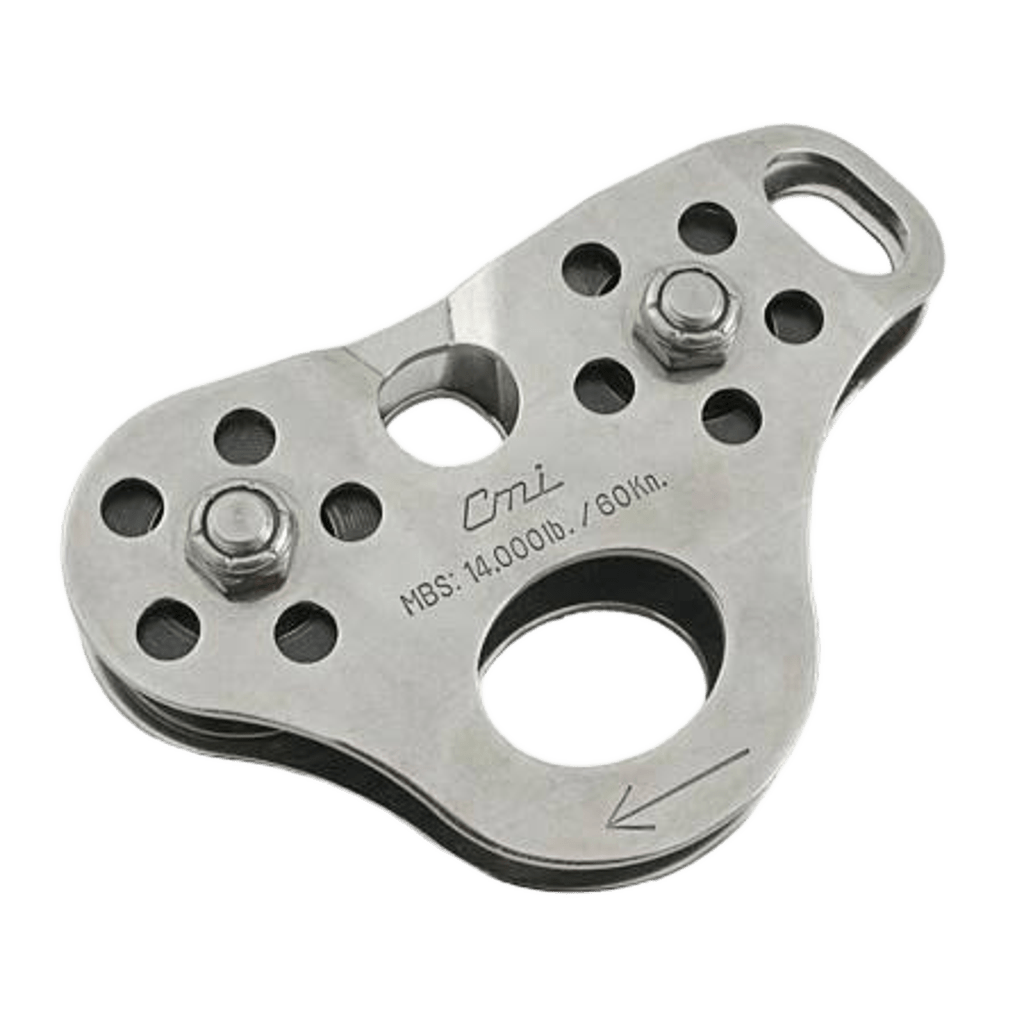
For a compact trolley without handlebars
CMI Microtrolley
Standard MICROTROLLEY · 1/4–1/2 in cable
A 0.75 lb stainless steel trolley with two 1.5-inch sheaves. The standard model has no listed rider brake.

CMI fits two 1½-inch stainless steel wheels and a stainless axle in a 5-by-3-inch body. At 0.75 lb it is the lightest pick for manual retrieval. CMI specifies ¼–½-inch cable or rope and a supporting harness and lanyard. Equipment fitted with CMI’s bumper or brake-shuttle adapter requires a different version. CMI Micro Trolley specification sheet and product details.
Fusion Z-MAX for a compatible line with handlebars

For a line specified for a handled trolley
Fusion Z-MAX
Black Z-MAX with handlebar · 8–12 mm cable
Fusion lists soft-grip handles and two sealed bearings. Its published cable range ends at 12 mm.
Fusion’s black Z-MAX combines soft grips and sealed bearings. Its cable rating is 8–12 mm. The wider 9–13 mm rope rating appeared as a cable limit in the Amazon listing we checked. Confirm any conflicting marking directly with Fusion. Fusion’s black Z-MAX specifications.
Petzl TRAC GUIDE for an adventure park replacement
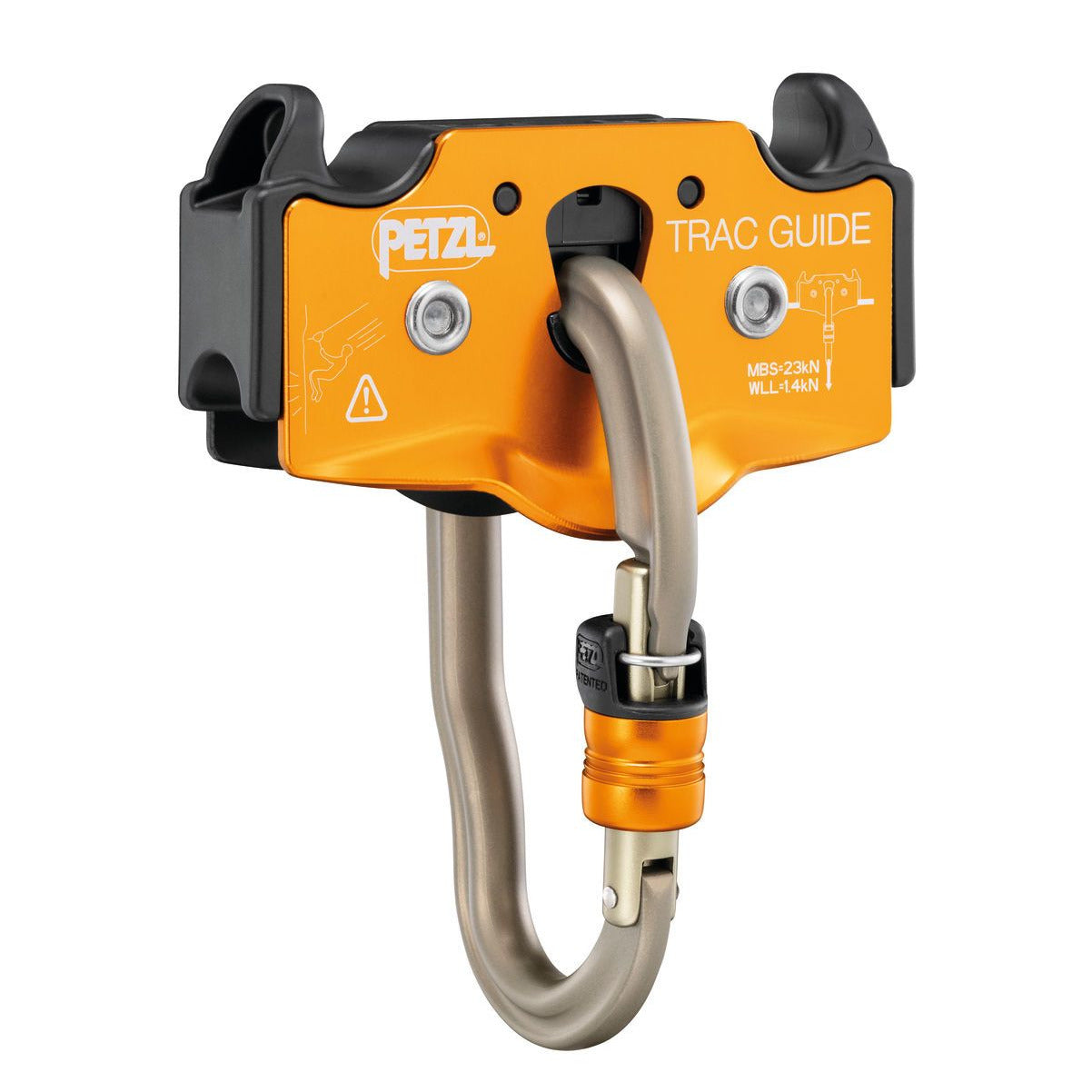
For an adventure park replacing its named GUIDE unit
Petzl TRAC GUIDE
Orange P024AB00 · one trolley · 9–13 mm cable
A 425 g unit with a captive carabiner and replaceable impact surfaces. The line’s end brake is a separate component.
The captive carabiner stays attached to the trolley, reducing the risk of accidental separation. Petzl credits two aligned sheaves with smooth travel and its pivoting carabiner with maintaining trolley position at the end brake. That combination helps control pitching as riders swing forward on arrival. Replaceable front and rear impact surfaces simplify maintenance as they wear. The GUIDE weighs 425 g and fits 9–13 mm cable. Match the outgoing reference. The gray GUIDE LT and CLUB have different part numbers. Petzl TRAC GUIDE specifications and instructions.
SaferZip Pro Zipliner X for a compatible roller-brake system
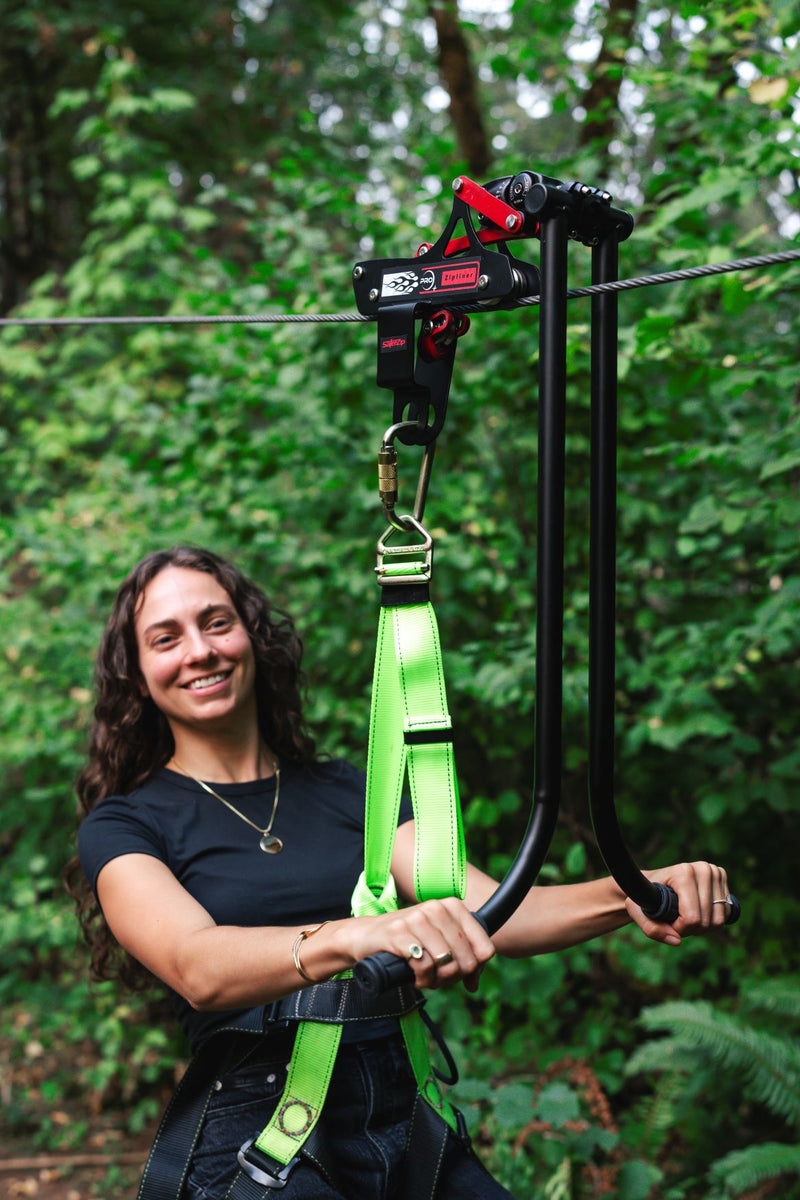
For a system specified for a rider-controlled brake
SaferZip Pro Zipliner X
Pro X standalone trolley · 5/16–1/2 in cable
Adjustable handlebars are part of its roller-braking system. The 8 lb figure is the weight of the trolley.
SaferZip’s adjustable forward-facing handlebars operate a pressure-roller brake. At 8 lb, it is the heaviest to carry back. Its padless design saves buying pads. SaferZip publishes no comparative test showing lower total wear. This offer is the standalone Pro trolley for 5/16–½-inch cable. Harness, lanyard and carabiner accessories are sold separately. The Backyard model has a different range. SaferZip Pro X product details.
How does cable diameter narrow down the best trolley for zipline use?
Read the line record and the manufacturer’s specification in the same units. Fusion distinguishes 8–12 mm on cable from 9–13 mm on rope. Both figures appear on Fusion’s web page. Shopping by the larger one leads to the wrong half-inch replacement. Fusion Z-MAX model and specifications.
All four match a nominal 3/8-inch cable diameter (9.525 mm). Check the brake system and connector next. At 1/2 inch, CMI and SaferZip reach their listed maximum, Petzl still has room within its 9–13 mm range, and Fusion is outside its rating. At 1/4 inch, only CMI qualifies on diameter. Does the trolley sheave groove have to match the cable diameter within ±0.005 inches? The four zipline trolleys specify approved ranges. Applying a part drawing’s tolerance across brands creates a risk of incompatible hardware.
What if a familiar pulley appears in the search results?
Many general-purpose rigging pulleys have a single grooved wheel, or sheave, to redirect a rope. Tandem zipline trolleys have two wheels in line. They support the moving frame at two points. Older Petzl TANDEM SPEED pulley instructions allowed use on cable up to 13 mm, which includes a 1/2-inch cable. Check the application as well as the diameter. Petzl now excludes it from cable use in adventure parks because it lacks the required drop resistance and finger protection. Petzl’s TANDEM SPEED cable-use clarification.
Do handlebars mean the trolley has a brake?
No. Fusion calls the Z-MAX bar a grip. SaferZip documents the Pro X handlebars as part of its brake system. For these similar-looking zipline trolleys, ask what equipment provides speed control in transit, arrival braking and backup. The difference in function is critical to riders.
Are the end protectors or a brake trolley the part you need?
Petzl’s replaceable impact surfaces belong to the rider trolley and meet the end brake. The TruBlue zipSTOP Brake Trolley belongs to a braking device. Riders use separate hardware. For a “brake trolley” order, request the exact reference. TruBlue zipSTOP replacement brake trolley · LightSpeed rider trolley.
Which speed rating applies at the end of the course?
Travel speed and impact speed can have different limits. TruBlue lists 75 mph maximum travel speed and 45 mph maximum impact speed on its commercial LightSpeed EZ Clip. A high-performance zipline trolley can therefore have a travel rating over 60 mph while its impact limit is considerably lower. For a high-speed line, have its professional compare both speed limits with the engineered system. At arrival, impact speed is critical. LightSpeed EZ Clip specifications.
Which wheel and bearing features matter for smooth travel and durability?
A sheave is the grooved wheel on the cable. Check the wheel material separately from the frame. CMI specifies stainless steel for the sheaves, axle and side plates. Petzl pairs an aluminum frame with stainless steel sheaves. A retailer calling these zipline trolleys “aluminum” may mean the frame or side plates.
Sealed bearings shield rolling surfaces from debris. Stainless steel can resist abrasion where the sheave contacts the cable. Fusion describes hardened stainless steel sheaves as common on high-throughput commercial lines, where the wheels repeatedly run on steel cable. A buyer still needs the grade and material for the shortlisted model.
Aluminum sheaves are generally lighter than comparable stainless steel sheaves. On steel cable, a softer aluminum sheave can wear faster than hardened stainless steel. Check the alloy and the approved cable. An anodized aluminum frame tells you nothing about the wheel’s material. Fusion on sheave materials.
Bearing quality affects smooth travel and service life. A wheel spinning on a flat counter may feel smooth. For durability under load, check wear criteria for the gear. Countertop speed cannot predict vibration or rider comfort.
Is the TRAC GUIDE LT simply a lighter GUIDE?
The orange TRAC GUIDE P024AB00 uses double-row ball bearings. The TRAC GUIDE LT P024DB00 uses single-row bearings. Both weigh 425 g and accept 9–13 mm cable. Use the model code when a catalog shows only mass and diameter. Petzl TRAC GUIDE · Petzl TRAC GUIDE LT.
How does the overturning moment affect wheel contact at the brake?
Two sheaves support the frame and help steady riders as the trolley moves forward. When a brake applies force away from the center of mass, the frame can rotate. This is the overturning moment. In its slow-motion example, Thrill Syndicate shows the front wheel lifting as the rider swings forward. That leaves the rear wheel bearing against the line.
Sudden stops can raise forces on the hardware. A smooth ride before the brake tells you little about that impact. TruBlue explains that forward weight distribution helps keep both wheels of its LightSpeed Micro on the line during impact. The trade-offs involve rider safety, smooth contact and cable wear.
The useful buying question is how the paired components manage the overturning moment at the site’s expected arrival speed. A larger offset from the center can increase the risk of rotation. Have a professional verify which trolley and brake were engineered and tested together. LightSpeed Micro design · Thrill Syndicate on trolley rotation.
What does a high-speed rating tell you about the brake system?
High-speed travel and controlled braking put different stresses on the hardware of a zipline system. A fast-spinning pulley encounters friction along the line; impact at the brake changes the load on the trolley hardware. Compare the operating speed and impact speed ratings separately.
Some zipline systems have a separate spring or friction brake. Others are engineered around magnetic braking. Neodymius describes cooling on its magnetic trolley to manage heat. For durability, ask which part of the brake system handles excessive heat and wear at its specified speed. Sealed bearings keep contaminants out. They provide no brake function. Neodymius magnetic trolley design.
Which safety standards and load labels matter for commercial operations?
CMI’s 14,000 lb figure is the component’s minimum breaking strength (MBS) under a specified test. The working load limit and the approved rider weight are separate quantities.
A shopper may see 20 kN quoted as the minimum breaking strength of a zipline trolley and a 5:1 safety factor suggested for zipline operations. Neither number establishes the working load limit of a particular system. A 20 kN pulley or rigging component gives no rider weight. The engineered line, connections and dynamic loads matter. Use the operator’s documented safety limits for that system.
Commercial adventure parks need the safety declaration for the exact trolley. In the ropes-course industry, EN 12278 covers pulleys and EN 17109 covers individual safety systems. UIAA 127 is a separate pulley standard for mountaineering equipment. For a UIAA Safety Label, request the exact pulley listing.
Professional trolleys need documented testing for their intended use. For the TRAC GUIDE pulley, Petzl’s declaration names EN 12278:2007 and EN 17109:2020, the TÜV SÜD type examination and independent production oversight. Industry buyers can match the tested references P024AB00 and P024AB01 to their quote. UIAA pulley standard · Petzl declaration of conformity.
ANSI/ASSP Z359.11 covers full-body harnesses. ACCT publishes challenge-course industry standards for the broader operation. For life-safety equipment, traceability is non-negotiable: match the seller’s safety claim to the model tested. Petzl technical information · ANSI full-body harness standard · ACCT standards development.
How do commercial operations compare maintenance and retrieval costs?
For a high-throughput park, take manual retrieval and maintaining gear into account. A 0.75 lb CMI and an 8 lb SaferZip create different carrying costs over a shift. Their brake functions also differ. If the line has a return device, ask which accessories must be attached and whether the quoted price includes them.
On a steep line, an open-bottom trolley allows quick detachment at the landing after the rider dismounts. For manual retrieval, compare carrying the gear with towing it back. SaferZip describes the eight-pound Pro X as easy to remove. Slope and arrival speed need separate approval. ZipLineGear on trolley return options.
Are spares included, and can you buy them later?
Petzl sells one GUIDE as P024AB00 and five as P024AB01. The CARITRAC storage accessory is included. P024BB00 buys a single replacement carabiner. P023BB00 buys two replacement impact surfaces and P023BB01 buys ten. For a high-throughput park maintaining a stock of spare gear, check those quantities when comparing the cost per item. A carabiner quote covers only that part. Petzl impact surface pack sizes · Petzl replacement carabiner references.
Service life depends on use, environment and care. In its inspection guide, Thrill Syndicate also calls out unusually early wear. A park that keeps wearing out a pulley in the same place should have the trolley and brake compatibility reviewed before ordering identical replacement hardware. Thrill Syndicate inspection guide.
CMI says its sealed bearings normally need no external lubrication. The wheels, frame and attachment points still need inspection for wear. ZipLineGear flags cable corrosion, broken wires and excessive abrasion inside the trolley housing. ISC’s ZIPspeed-S manual identifies burrs at the trolley attachment points. Ask the inspecting professional which part is damaged. New gear will not fix the existing cable. ZipLineGear inspection guidance · ISC ZIPspeed-S user instructions.
Petzl calls for a pre-use check on its TRAC and recommends a separate, recorded inspection by a competent person at least every 12 months, more often with intensive use. ZipLineGear calls for a monthly cable check on its own setup.
Bearing replacement is another issue. Neither Petzl nor CMI’s cited guidance sets a universal two-to-three-year bearing replacement date. When maintaining a fleet, confirm the calendar, cycle or wear criterion for the model and record replacements against its serial number. ZipLineGear cable inspection interval · CMI trolley care · Petzl TRAC technical notice.
Which zipline trolleys fit a 5/16-inch cable?
CMI and SaferZip list that nominal size. A 5/16-inch cable is 7.9375 mm. Rounding up to 8 mm leads to a Fusion recommendation outside the manufacturer’s stated range. The Petzl starts at 9 mm. Of the two remaining zipline trolleys, the compact CMI and the roller-braked SaferZip serve different systems. Check the brake arrangement your provider approved.
What records should come with a used trolley?
Look for a legible part reference, serial identifier and inspection record. Petzl’s form includes the date of first use, equipment history and inspection findings. In 2022, the brand recalled certain TRAC CLUB units and expressly excluded the TRAC GUIDE from that notice. The family name in a Facebook listing cannot resolve a serial-specific safety question. Give the reviewing professional a photo of the actual label. Petzl recall and affected model references · Petzl TRAC inspection record.
What is the best trolley for zipline replacement on your particular line?
Buying recreational gear? Ask the original system provider for the approved replacement reference. In the adventure-park industry, features suited to frequent use include traceable units, accessible maintenance records and a source for spares. Compare the total cost of the trolley and its approved hardware. For an engineered high-speed line, the professional reviewing the order needs the documented speed and brake limits as well. Weigh those durability and staffing trade-offs.
On each Amazon offer, match the part number, variant and package before checkout. A listing with more comments may combine feedback on multiple models. Look for comments that name your exact trolley. A pictured harness or lanyard may be sold separately. Check the seller’s written contents against your parts list. How Best Suggestions checks model and fit.